Home Blog Page 9

7 Best ChatGPT Writing Prompts for 2026: Complete Guide for ChatGPT Users

0

7 Best ChatGPT Writing Prompts for 2026 is becoming increasingly relevant for ChatGPT users because it improves how people structure, refine, and scale AI-assisted work. What used to be a single prompt-and-response workflow is evolving into more deliberate multi-step systems that produce clearer, more useful output. For everyday users, that means better results with less frustration. For advanced users, it opens the door to repeatable workflows that feel much closer to real productivity systems than simple chatbot interactions.

This matters because most disappointing AI results do not come from weak models alone. They come from weak process design. When users break tasks into smaller, connected prompt stages, they usually get stronger accuracy, better structure, and more practical output. In 2026, understanding this shift is one of the easiest ways to get more value from ChatGPT without needing custom software or complex automation stacks.

What prompt chaining actually means

Prompt chaining means splitting one large request into a sequence of smaller prompts, where each step improves or prepares the next one. Instead of asking ChatGPT to do everything at once, you guide it through stages such as idea generation, outlining, drafting, refinement, fact checking, formatting, and final polishing. This approach reduces ambiguity and gives the model a clearer path to follow.

For example, instead of saying “write a complete article about AI tools,” a better chain might be: generate ten angles, choose the strongest angle, create an outline, expand each section, rewrite the introduction for clarity, and then shorten the conclusion for stronger impact. The result is often much better because each step gives the model a focused job.

Why ChatGPT users are getting better results with chained prompts

  • Better clarity: smaller instructions reduce confusion and improve output consistency.
  • Higher quality: each prompt can improve one specific part of the work.
  • Easier correction: if something goes wrong, you can fix one step without rebuilding everything.
  • More reusable workflows: once a chain works well, it can become a repeatable personal system.
  • Stronger trust: structured prompting helps users understand where the output came from and how to improve it.

Practical examples for everyday ChatGPT use

Prompt chaining is useful far beyond technical users. Students can use it to break research into source gathering, summary drafting, comparison, and revision. Freelancers can use it to turn a client brief into positioning, headlines, email copy, and landing page sections. Marketers can use chained prompts to move from campaign goals to audience angles, hooks, post variations, and final review. Even simple tasks like writing a better email or planning a week of content improve when the workflow is broken into steps.

Simple prompt chain template

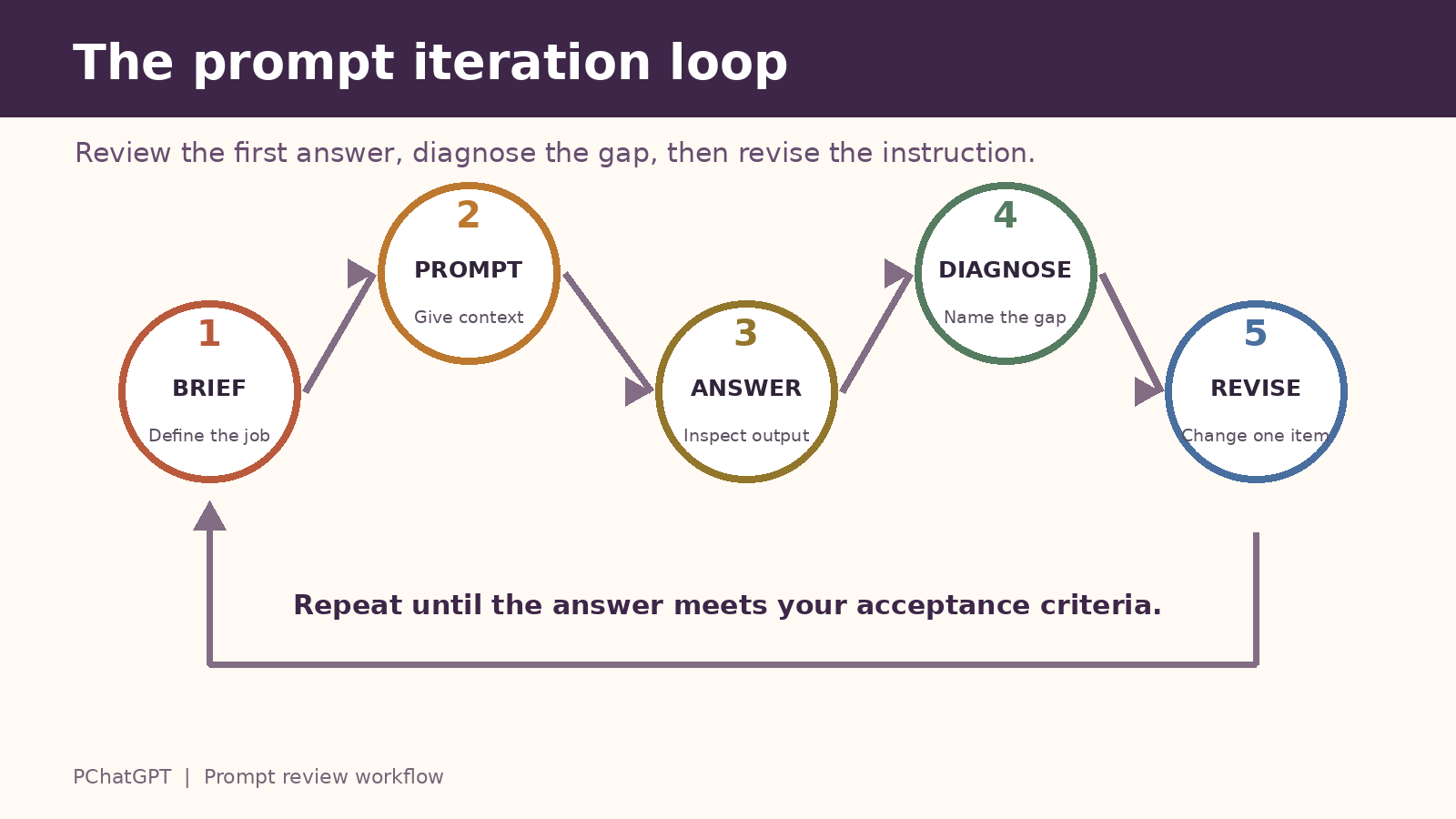
  • Step 1: Define the goal clearly.
  • Step 2: Ask for 3 to 5 possible approaches.
  • Step 3: Choose the best approach and ask for an outline.
  • Step 4: Expand one section at a time.
  • Step 5: Ask for revision, simplification, or stronger formatting.
  • Step 6: Review the final version with a quality-check prompt.

Common mistakes to avoid

  • Trying to solve everything with one giant prompt.
  • Skipping context between steps.
  • Changing the goal mid-chain without telling the model.
  • Asking for polish before getting the structure right.
  • Assuming the first output is the final answer.

Final take

7 Best ChatGPT Writing Prompts for 2026 is a practical reminder that getting better results from ChatGPT is often less about finding a secret prompt and more about building a better process. Users who think in steps usually get clearer, stronger, and more dependable outcomes. That makes prompt chaining one of the most useful habits any serious ChatGPT user can develop in 2026.

Related update: Best ChatGPT Prompts in 2026: 200+ Prompts for Work, Writing, and Coding: Complete Guide for ChatGPT Users.

Custom GPTs Evolve Into Practical Mini-Tools for Repeated Tasks: Complete Guide for ChatGPT Users

0

Custom GPTs Evolve Into Practical Mini-Tools for Repeated Tasks is becoming increasingly relevant for ChatGPT users because it improves how people structure, refine, and scale AI-assisted work. What used to be a single prompt-and-response workflow is evolving into more deliberate multi-step systems that produce clearer, more useful output. For everyday users, that means better results with less frustration. For advanced users, it opens the door to repeatable workflows that feel much closer to real productivity systems than simple chatbot interactions.

This matters because most disappointing AI results do not come from weak models alone. They come from weak process design. When users break tasks into smaller, connected prompt stages, they usually get stronger accuracy, better structure, and more practical output. In 2026, understanding this shift is one of the easiest ways to get more value from ChatGPT without needing custom software or complex automation stacks.

What prompt chaining actually means

Prompt chaining means splitting one large request into a sequence of smaller prompts, where each step improves or prepares the next one. Instead of asking ChatGPT to do everything at once, you guide it through stages such as idea generation, outlining, drafting, refinement, fact checking, formatting, and final polishing. This approach reduces ambiguity and gives the model a clearer path to follow.

For example, instead of saying “write a complete article about AI tools,” a better chain might be: generate ten angles, choose the strongest angle, create an outline, expand each section, rewrite the introduction for clarity, and then shorten the conclusion for stronger impact. The result is often much better because each step gives the model a focused job.

Why ChatGPT users are getting better results with chained prompts

  • Better clarity: smaller instructions reduce confusion and improve output consistency.
  • Higher quality: each prompt can improve one specific part of the work.
  • Easier correction: if something goes wrong, you can fix one step without rebuilding everything.
  • More reusable workflows: once a chain works well, it can become a repeatable personal system.
  • Stronger trust: structured prompting helps users understand where the output came from and how to improve it.

Practical examples for everyday ChatGPT use

Prompt chaining is useful far beyond technical users. Students can use it to break research into source gathering, summary drafting, comparison, and revision. Freelancers can use it to turn a client brief into positioning, headlines, email copy, and landing page sections. Marketers can use chained prompts to move from campaign goals to audience angles, hooks, post variations, and final review. Even simple tasks like writing a better email or planning a week of content improve when the workflow is broken into steps.

Simple prompt chain template

  • Step 1: Define the goal clearly.
  • Step 2: Ask for 3 to 5 possible approaches.
  • Step 3: Choose the best approach and ask for an outline.
  • Step 4: Expand one section at a time.
  • Step 5: Ask for revision, simplification, or stronger formatting.
  • Step 6: Review the final version with a quality-check prompt.

Common mistakes to avoid

  • Trying to solve everything with one giant prompt.
  • Skipping context between steps.
  • Changing the goal mid-chain without telling the model.
  • Asking for polish before getting the structure right.
  • Assuming the first output is the final answer.

Final take

Custom GPTs Evolve Into Practical Mini-Tools for Repeated Tasks is a practical reminder that getting better results from ChatGPT is often less about finding a secret prompt and more about building a better process. Users who think in steps usually get clearer, stronger, and more dependable outcomes. That makes prompt chaining one of the most useful habits any serious ChatGPT user can develop in 2026.

Robotics Startups Shift From Demos to Paid Industrial Deployments: What It Means for Creators, Marketers, and Global Content Strategy

0

# Robotics Startups Shift From Demos to Paid Industrial Deployments: What It Means for Creators, Marketers, and Global Content Strategy

**Published:** 2026-04-10 | **Reading time:** 9 min

## Introduction

Robotics Startups Shift From Demos to Paid Industrial Deployments is not just another AI product update. It points to a bigger transformation in how digital content is created, localized, distributed, and monetized. For creators, educators, agencies, marketers, and SaaS founders, the shift is especially important because language has always been one of the biggest barriers to global growth. When AI makes multilingual production easier, the economics of content change.

That means a single piece of content can potentially reach more regions, more customer segments, and more platforms without requiring a full production team in every market. In 2026, this matters because audience growth is no longer just about publishing more. It is about making the same core content travel farther, faster, and more effectively.

## Why This Matters in 2026

The AI content market is moving from novelty to workflow infrastructure. For a while, most people thought of AI dubbing and localization as interesting extras. Now they are becoming serious business tools. Creators want broader reach. Educators want multilingual courses. SaaS companies want product explainers for different markets. Agencies want faster client delivery. Brands want localized campaigns without multiplying production cost.

That is why this topic matters. It sits at the intersection of creator economy growth, AI automation, and international distribution. When a tool reduces the friction of localization, it increases the lifetime value of every high-quality video, tutorial, course, and explainer.

## The Business Impact of AI Localization

AI localization changes more than production speed. It changes the way content can be planned as an asset.

### 1. Higher return on every content asset
One strong video or tutorial can be repurposed for multiple regions instead of staying limited to one language audience.

### 2. Faster international testing
Creators and businesses can test which languages, regions, and audiences respond best before investing heavily in manual localization.

### 3. Lower expansion cost
Teams that previously needed voice actors, translators, editors, and extra production time can now reduce cost and move faster.

### 4. Better long-tail content value
Evergreen educational or explanatory content can keep generating value for a longer time if it is accessible in more than one language.

## Who Benefits Most

This trend is especially useful for several groups:

– **YouTube creators** who want to grow globally without rebuilding each video manually
– **course creators and educators** who want to sell knowledge products in multiple markets
– **SaaS founders** who need product demos and onboarding videos for different regions
– **marketing teams** that want campaign assets localized quickly
– **agencies** that want multilingual delivery without massive production overhead

These groups all face the same challenge: strong content is expensive to create, but weak distribution limits growth. AI localization helps close that gap.

## Practical Use Cases

Here are some of the most useful workflows this trend unlocks:

### Creator workflow
1. script and record a strong original video
2. generate multilingual dubbing versions
3. review voice tone and timing
4. publish region-specific uploads or edits
5. compare watch time and retention across languages

### Education workflow
1. create one high-quality lesson
2. localize audio for selected languages
3. add matching subtitles and descriptions
4. publish localized course modules
5. track completion rates by audience region

### SaaS workflow
1. create a product demo once
2. dub it for top target markets
3. embed localized versions in onboarding and sales pages
4. test which market responds best
5. expand only where traction appears

## SEO and Content Strategy Angle

From an SEO perspective, topics like this have strong value when the content goes beyond a headline summary. People searching for AI dubbing, content localization, multilingual publishing, or global creator strategy usually want to know more than “what launched.” They want to know whether the tool is useful, who should use it, what business advantage it creates, and how to implement it effectively.

That means a strong article should connect the product update to practical workflows, monetization opportunities, and audience growth. Thin articles may get indexed, but stronger articles are more likely to hold attention, build trust, and create repeat visits. For pchatgpt.net, that matters because the site should feel like a useful AI guide, not just a feed of short summaries.

## Risks and What to Watch Out For

AI localization is powerful, but it still needs quality control. Teams should watch for:

– unnatural tone or emotion in dubbed output
– mistranslations or context loss
– cultural mismatch in localized content
– over-reliance on automation without review

The best results come when AI speeds up the process while humans protect quality. That balance is where most of the business value appears.

## Final Take

Robotics Startups Shift From Demos to Paid Industrial Deployments shows how AI is becoming part of the real infrastructure behind content growth. The opportunity is not just better dubbing or better translation. The real opportunity is building content systems that scale internationally without scaling cost at the same rate. For creators, marketers, and digital businesses, that is a serious advantage in 2026.

Related update: DeepSeek V4 to Run on Huawei Chips: What It Means for AI Creators, Founders, and Global Competition.

Meta Scales On-Device AI Features Across Consumer Apps: What It Means for Creators, Marketers, and Global Content Strategy

0

# Meta Scales On-Device AI Features Across Consumer Apps: What It Means for Creators, Marketers, and Global Content Strategy

**Published:** 2026-04-10 | **Reading time:** 9 min

## Introduction

Meta Scales On-Device AI Features Across Consumer Apps is not just another AI product update. It points to a bigger transformation in how digital content is created, localized, distributed, and monetized. For creators, educators, agencies, marketers, and SaaS founders, the shift is especially important because language has always been one of the biggest barriers to global growth. When AI makes multilingual production easier, the economics of content change.

That means a single piece of content can potentially reach more regions, more customer segments, and more platforms without requiring a full production team in every market. In 2026, this matters because audience growth is no longer just about publishing more. It is about making the same core content travel farther, faster, and more effectively.

## Why This Matters in 2026

The AI content market is moving from novelty to workflow infrastructure. For a while, most people thought of AI dubbing and localization as interesting extras. Now they are becoming serious business tools. Creators want broader reach. Educators want multilingual courses. SaaS companies want product explainers for different markets. Agencies want faster client delivery. Brands want localized campaigns without multiplying production cost.

That is why this topic matters. It sits at the intersection of creator economy growth, AI automation, and international distribution. When a tool reduces the friction of localization, it increases the lifetime value of every high-quality video, tutorial, course, and explainer.

## The Business Impact of AI Localization

AI localization changes more than production speed. It changes the way content can be planned as an asset.

### 1. Higher return on every content asset
One strong video or tutorial can be repurposed for multiple regions instead of staying limited to one language audience.

### 2. Faster international testing
Creators and businesses can test which languages, regions, and audiences respond best before investing heavily in manual localization.

### 3. Lower expansion cost
Teams that previously needed voice actors, translators, editors, and extra production time can now reduce cost and move faster.

### 4. Better long-tail content value
Evergreen educational or explanatory content can keep generating value for a longer time if it is accessible in more than one language.

## Who Benefits Most

This trend is especially useful for several groups:

– **YouTube creators** who want to grow globally without rebuilding each video manually
– **course creators and educators** who want to sell knowledge products in multiple markets
– **SaaS founders** who need product demos and onboarding videos for different regions
– **marketing teams** that want campaign assets localized quickly
– **agencies** that want multilingual delivery without massive production overhead

These groups all face the same challenge: strong content is expensive to create, but weak distribution limits growth. AI localization helps close that gap.

## Practical Use Cases

Here are some of the most useful workflows this trend unlocks:

### Creator workflow
1. script and record a strong original video
2. generate multilingual dubbing versions
3. review voice tone and timing
4. publish region-specific uploads or edits
5. compare watch time and retention across languages

### Education workflow
1. create one high-quality lesson
2. localize audio for selected languages
3. add matching subtitles and descriptions
4. publish localized course modules
5. track completion rates by audience region

### SaaS workflow
1. create a product demo once
2. dub it for top target markets
3. embed localized versions in onboarding and sales pages
4. test which market responds best
5. expand only where traction appears

## SEO and Content Strategy Angle

From an SEO perspective, topics like this have strong value when the content goes beyond a headline summary. People searching for AI dubbing, content localization, multilingual publishing, or global creator strategy usually want to know more than “what launched.” They want to know whether the tool is useful, who should use it, what business advantage it creates, and how to implement it effectively.

That means a strong article should connect the product update to practical workflows, monetization opportunities, and audience growth. Thin articles may get indexed, but stronger articles are more likely to hold attention, build trust, and create repeat visits. For pchatgpt.net, that matters because the site should feel like a useful AI guide, not just a feed of short summaries.

## Risks and What to Watch Out For

AI localization is powerful, but it still needs quality control. Teams should watch for:

– unnatural tone or emotion in dubbed output
– mistranslations or context loss
– cultural mismatch in localized content
– over-reliance on automation without review

The best results come when AI speeds up the process while humans protect quality. That balance is where most of the business value appears.

## Final Take

Meta Scales On-Device AI Features Across Consumer Apps shows how AI is becoming part of the real infrastructure behind content growth. The opportunity is not just better dubbing or better translation. The real opportunity is building content systems that scale internationally without scaling cost at the same rate. For creators, marketers, and digital businesses, that is a serious advantage in 2026.

Perplexity AI Raises $1B for Answer Engine Expansion: What It Means for Creators, Marketers, and Global Content Strategy

0

# Perplexity AI Raises $1B for Answer Engine Expansion: What It Means for Creators, Marketers, and Global Content Strategy

**Published:** 2026-04-09 | **Reading time:** 9 min

## Introduction

Perplexity AI Raises $1B for Answer Engine Expansion is not just another AI product update. It points to a bigger transformation in how digital content is created, localized, distributed, and monetized. For creators, educators, agencies, marketers, and SaaS founders, the shift is especially important because language has always been one of the biggest barriers to global growth. When AI makes multilingual production easier, the economics of content change.

That means a single piece of content can potentially reach more regions, more customer segments, and more platforms without requiring a full production team in every market. In 2026, this matters because audience growth is no longer just about publishing more. It is about making the same core content travel farther, faster, and more effectively.

## Why This Matters in 2026

The AI content market is moving from novelty to workflow infrastructure. For a while, most people thought of AI dubbing and localization as interesting extras. Now they are becoming serious business tools. Creators want broader reach. Educators want multilingual courses. SaaS companies want product explainers for different markets. Agencies want faster client delivery. Brands want localized campaigns without multiplying production cost.

That is why this topic matters. It sits at the intersection of creator economy growth, AI automation, and international distribution. When a tool reduces the friction of localization, it increases the lifetime value of every high-quality video, tutorial, course, and explainer.

## The Business Impact of AI Localization

AI localization changes more than production speed. It changes the way content can be planned as an asset.

### 1. Higher return on every content asset
One strong video or tutorial can be repurposed for multiple regions instead of staying limited to one language audience.

### 2. Faster international testing
Creators and businesses can test which languages, regions, and audiences respond best before investing heavily in manual localization.

### 3. Lower expansion cost
Teams that previously needed voice actors, translators, editors, and extra production time can now reduce cost and move faster.

### 4. Better long-tail content value
Evergreen educational or explanatory content can keep generating value for a longer time if it is accessible in more than one language.

## Who Benefits Most

This trend is especially useful for several groups:

– **YouTube creators** who want to grow globally without rebuilding each video manually
– **course creators and educators** who want to sell knowledge products in multiple markets
– **SaaS founders** who need product demos and onboarding videos for different regions
– **marketing teams** that want campaign assets localized quickly
– **agencies** that want multilingual delivery without massive production overhead

These groups all face the same challenge: strong content is expensive to create, but weak distribution limits growth. AI localization helps close that gap.

## Practical Use Cases

Here are some of the most useful workflows this trend unlocks:

### Creator workflow
1. script and record a strong original video
2. generate multilingual dubbing versions
3. review voice tone and timing
4. publish region-specific uploads or edits
5. compare watch time and retention across languages

### Education workflow
1. create one high-quality lesson
2. localize audio for selected languages
3. add matching subtitles and descriptions
4. publish localized course modules
5. track completion rates by audience region

### SaaS workflow
1. create a product demo once
2. dub it for top target markets
3. embed localized versions in onboarding and sales pages
4. test which market responds best
5. expand only where traction appears

## SEO and Content Strategy Angle

From an SEO perspective, topics like this have strong value when the content goes beyond a headline summary. People searching for AI dubbing, content localization, multilingual publishing, or global creator strategy usually want to know more than “what launched.” They want to know whether the tool is useful, who should use it, what business advantage it creates, and how to implement it effectively.

That means a strong article should connect the product update to practical workflows, monetization opportunities, and audience growth. Thin articles may get indexed, but stronger articles are more likely to hold attention, build trust, and create repeat visits. For pchatgpt.net, that matters because the site should feel like a useful AI guide, not just a feed of short summaries.

## Risks and What to Watch Out For

AI localization is powerful, but it still needs quality control. Teams should watch for:

– unnatural tone or emotion in dubbed output
– mistranslations or context loss
– cultural mismatch in localized content
– over-reliance on automation without review

The best results come when AI speeds up the process while humans protect quality. That balance is where most of the business value appears.

## Final Take

Perplexity AI Raises $1B for Answer Engine Expansion shows how AI is becoming part of the real infrastructure behind content growth. The opportunity is not just better dubbing or better translation. The real opportunity is building content systems that scale internationally without scaling cost at the same rate. For creators, marketers, and digital businesses, that is a serious advantage in 2026.

Related update: DeepSeek V4 to Run on Huawei Chips: What It Means for AI Creators, Founders, and Global Competition.

Perplexity AI Raises $1B for Answer Engine Expansion: What It Means for Creators, Marketers, and Global Content Strategy

0

# Perplexity AI Raises $1B for Answer Engine Expansion: What It Means for Creators, Marketers, and Global Content Strategy

**Published:** 2026-04-08 | **Reading time:** 9 min

## Introduction

Perplexity AI Raises $1B for Answer Engine Expansion is not just another AI product update. It points to a bigger transformation in how digital content is created, localized, distributed, and monetized. For creators, educators, agencies, marketers, and SaaS founders, the shift is especially important because language has always been one of the biggest barriers to global growth. When AI makes multilingual production easier, the economics of content change.

That means a single piece of content can potentially reach more regions, more customer segments, and more platforms without requiring a full production team in every market. In 2026, this matters because audience growth is no longer just about publishing more. It is about making the same core content travel farther, faster, and more effectively.

## Why This Matters in 2026

The AI content market is moving from novelty to workflow infrastructure. For a while, most people thought of AI dubbing and localization as interesting extras. Now they are becoming serious business tools. Creators want broader reach. Educators want multilingual courses. SaaS companies want product explainers for different markets. Agencies want faster client delivery. Brands want localized campaigns without multiplying production cost.

That is why this topic matters. It sits at the intersection of creator economy growth, AI automation, and international distribution. When a tool reduces the friction of localization, it increases the lifetime value of every high-quality video, tutorial, course, and explainer.

## The Business Impact of AI Localization

AI localization changes more than production speed. It changes the way content can be planned as an asset.

### 1. Higher return on every content asset
One strong video or tutorial can be repurposed for multiple regions instead of staying limited to one language audience.

### 2. Faster international testing
Creators and businesses can test which languages, regions, and audiences respond best before investing heavily in manual localization.

### 3. Lower expansion cost
Teams that previously needed voice actors, translators, editors, and extra production time can now reduce cost and move faster.

### 4. Better long-tail content value
Evergreen educational or explanatory content can keep generating value for a longer time if it is accessible in more than one language.

## Who Benefits Most

This trend is especially useful for several groups:

– **YouTube creators** who want to grow globally without rebuilding each video manually
– **course creators and educators** who want to sell knowledge products in multiple markets
– **SaaS founders** who need product demos and onboarding videos for different regions
– **marketing teams** that want campaign assets localized quickly
– **agencies** that want multilingual delivery without massive production overhead

These groups all face the same challenge: strong content is expensive to create, but weak distribution limits growth. AI localization helps close that gap.

## Practical Use Cases

Here are some of the most useful workflows this trend unlocks:

### Creator workflow
1. script and record a strong original video
2. generate multilingual dubbing versions
3. review voice tone and timing
4. publish region-specific uploads or edits
5. compare watch time and retention across languages

### Education workflow
1. create one high-quality lesson
2. localize audio for selected languages
3. add matching subtitles and descriptions
4. publish localized course modules
5. track completion rates by audience region

### SaaS workflow
1. create a product demo once
2. dub it for top target markets
3. embed localized versions in onboarding and sales pages
4. test which market responds best
5. expand only where traction appears

## SEO and Content Strategy Angle

From an SEO perspective, topics like this have strong value when the content goes beyond a headline summary. People searching for AI dubbing, content localization, multilingual publishing, or global creator strategy usually want to know more than “what launched.” They want to know whether the tool is useful, who should use it, what business advantage it creates, and how to implement it effectively.

That means a strong article should connect the product update to practical workflows, monetization opportunities, and audience growth. Thin articles may get indexed, but stronger articles are more likely to hold attention, build trust, and create repeat visits. For pchatgpt.net, that matters because the site should feel like a useful AI guide, not just a feed of short summaries.

## Risks and What to Watch Out For

AI localization is powerful, but it still needs quality control. Teams should watch for:

– unnatural tone or emotion in dubbed output
– mistranslations or context loss
– cultural mismatch in localized content
– over-reliance on automation without review

The best results come when AI speeds up the process while humans protect quality. That balance is where most of the business value appears.

## Final Take

Perplexity AI Raises $1B for Answer Engine Expansion shows how AI is becoming part of the real infrastructure behind content growth. The opportunity is not just better dubbing or better translation. The real opportunity is building content systems that scale internationally without scaling cost at the same rate. For creators, marketers, and digital businesses, that is a serious advantage in 2026.

Related update: DeepSeek V4 to Run on Huawei Chips: What It Means for AI Creators, Founders, and Global Competition.

Anthropic Acquires Coefficient Bio for $400M – Major Life Sciences Push

0

ChatGPT and AI enthusiasts, here’s everything you need to know about Anthropic Acquires Coefficient Bio for $400M – Major Life Sciences Push and how it impacts your AI workflow. This comprehensive guide breaks down the technical details, practical applications, and how you can leverage this development starting today.

What is Anthropic Acquires Coefficient Bio for $400M – Major Life Sciences Push?

Anthropic has acquired New York-based Coefficient Bio for approximately $400 million, marking the AI giant’s most significant move into the life sciences sector. This builds on Anthropic’s October 2025 launch of Claude Life Sciences, designed for biopharma professionals including scientists, clinical trial coordinators, and regulatory managers. Major pharmaceutical companies like Sanofi, Novo Nordisk, and AbbVie are increasingly integrating Claude into their operations.

For ChatGPT users, this development represents another step toward more capable and versatile AI systems. While this particular technology comes from outside OpenAI, the broader implications for AI-powered workflows are significant. Understanding these advances helps you get more from your existing AI tools while preparing for what’s next.

Core Capabilities Explained

  • Multi-modal Understanding: Processing and generating content across different formats
  • Context Awareness: Better comprehension of nuanced instructions and user intent
  • Workflow Integration: Seamless connection with existing tools and platforms
  • Performance Optimization: Faster response times and higher quality outputs
  • Customization Options: Adaptable to specific use cases and requirements

Why This Matters for ChatGPT Users

This signals AI’s deepening penetration into regulated, high-stakes industries like drug discovery and healthcare. Following Eli Lilly’s $2.75B investment in Insilico Medicine’s AI drug design platform, we’re seeing a clear trend: AI is becoming core infrastructure in pharmaceutical R&D, not just a productivity tool.

The Competitive AI Landscape

The AI space is heating up with innovations from multiple players. While ChatGPT remains the most popular AI assistant, competitors are rapidly closing the gap with specialized features. This competition ultimately benefits users through faster innovation, better pricing, and more diverse capabilities.

For power users, staying informed about these developments means you can choose the right tool for each task. Sometimes that’s ChatGPT, sometimes it’s a specialized alternative. The key is building a flexible AI toolkit that serves your specific needs.

Practical Applications and Prompts

Analyze AI’s role in drug discovery and healthcare. Cover the convergence of AI and biotech M&A activity. Explore opportunities in AI-powered healthcare workflow tools for smaller clinics and practices.

Sample ChatGPT Prompts to Try

Here are some prompts that leverage the principles behind Anthropic Acquires Coefficient Bio for $400M – Major Life Sciences Push, adapted for ChatGPT:

“Explain the key concepts behind Anthropic Acquires Coefficient Bio for $400M – Major Life Sciences Push as they relate to my work in [your industry]. Provide specific examples I can implement today.”

“Create a step-by-step guide for integrating AI Healthcare / M&A principles into my daily workflow. Include common pitfalls and how to avoid them.”

“Analyze how Anthropic Acquires Coefficient might change [specific task] in the next 12 months. What should I learn now to stay ahead?”

How to Implement AI Healthcare / M&A Best Practices

Step 1: Audit Your Current AI Usage

Before adding new tools or workflows, understand what you’re currently doing. Document which AI features you use most, where you experience friction, and what outcomes you’re seeking. This baseline helps you measure improvement.

Step 2: Learn Advanced Prompting Techniques

The difference between average and expert AI users often comes down to prompting skills. Study chain-of-thought prompting, few-shot examples, and role-based instructions. These techniques dramatically improve output quality regardless of which AI tool you’re using.

Step 3: Build Your AI Workflow Stack

Create a personal system for when to use which AI tool. ChatGPT excels at general-purpose tasks and creative work. Specialized tools might be better for coding, research, or specific domains. Document your preferences and refine them as tools evolve.

Common Mistakes to Avoid

Even experienced AI users make these errors when adapting to new capabilities:

  • Over-relying on defaults: Don’t use AI at 50% capacity because you haven’t explored advanced features
  • Ignoring context limitations: Every AI has constraints—understand them to work around them
  • Skipping verification: Always fact-check AI outputs, especially for critical decisions
  • Not iterating: First drafts are rarely perfect—use follow-up prompts to refine results
  • Falling behind: The AI space moves fast—commit to continuous learning

Future of AI: What to Expect

The next 12 months will likely bring significant advances in AI capabilities, accessibility, and integration. We’re moving beyond novelty toward genuine productivity transformation. Users who develop strong AI skills now will have substantial advantages over late adopters.

Expect to see better multi-modal capabilities, improved reasoning, and more seamless integration with everyday tools. The line between “AI-powered” and “regular” software will blur as AI becomes standard across all applications.

Conclusion: Your Next Steps

Anthropic Acquires Coefficient Bio for $400M – Major Life Sciences Push represents another milestone in AI’s rapid evolution. For ChatGPT users, this means new possibilities and approaches to explore. The key is staying informed, experimenting consistently, and building genuine expertise rather than just surface-level familiarity.

What’s your experience with AI Healthcare / M&A? Share your favorite prompts, workflows, or questions in the comments. Let’s learn from each other and build a community of AI power users.

Subscribe to PChatGPT for weekly insights on maximizing your AI productivity. We cover the latest developments, practical tutorials, and expert tips you won’t find anywhere else.

How to Build AI Agents That Actually Work in Production: What It Means for Creators, Marketers, and Global Content Strategy

0

# How to Build AI Agents That Actually Work in Production: What It Means for Creators, Marketers, and Global Content Strategy

**Published:** 2026-04-07 | **Reading time:** 9 min

## Introduction

How to Build AI Agents That Actually Work in Production is not just another AI product update. It points to a bigger transformation in how digital content is created, localized, distributed, and monetized. For creators, educators, agencies, marketers, and SaaS founders, the shift is especially important because language has always been one of the biggest barriers to global growth. When AI makes multilingual production easier, the economics of content change.

That means a single piece of content can potentially reach more regions, more customer segments, and more platforms without requiring a full production team in every market. In 2026, this matters because audience growth is no longer just about publishing more. It is about making the same core content travel farther, faster, and more effectively.

## Why This Matters in 2026

The AI content market is moving from novelty to workflow infrastructure. For a while, most people thought of AI dubbing and localization as interesting extras. Now they are becoming serious business tools. Creators want broader reach. Educators want multilingual courses. SaaS companies want product explainers for different markets. Agencies want faster client delivery. Brands want localized campaigns without multiplying production cost.

That is why this topic matters. It sits at the intersection of creator economy growth, AI automation, and international distribution. When a tool reduces the friction of localization, it increases the lifetime value of every high-quality video, tutorial, course, and explainer.

## The Business Impact of AI Localization

AI localization changes more than production speed. It changes the way content can be planned as an asset.

### 1. Higher return on every content asset
One strong video or tutorial can be repurposed for multiple regions instead of staying limited to one language audience.

### 2. Faster international testing
Creators and businesses can test which languages, regions, and audiences respond best before investing heavily in manual localization.

### 3. Lower expansion cost
Teams that previously needed voice actors, translators, editors, and extra production time can now reduce cost and move faster.

### 4. Better long-tail content value
Evergreen educational or explanatory content can keep generating value for a longer time if it is accessible in more than one language.

## Who Benefits Most

This trend is especially useful for several groups:

– **YouTube creators** who want to grow globally without rebuilding each video manually
– **course creators and educators** who want to sell knowledge products in multiple markets
– **SaaS founders** who need product demos and onboarding videos for different regions
– **marketing teams** that want campaign assets localized quickly
– **agencies** that want multilingual delivery without massive production overhead

These groups all face the same challenge: strong content is expensive to create, but weak distribution limits growth. AI localization helps close that gap.

## Practical Use Cases

Here are some of the most useful workflows this trend unlocks:

### Creator workflow
1. script and record a strong original video
2. generate multilingual dubbing versions
3. review voice tone and timing
4. publish region-specific uploads or edits
5. compare watch time and retention across languages

### Education workflow
1. create one high-quality lesson
2. localize audio for selected languages
3. add matching subtitles and descriptions
4. publish localized course modules
5. track completion rates by audience region

### SaaS workflow
1. create a product demo once
2. dub it for top target markets
3. embed localized versions in onboarding and sales pages
4. test which market responds best
5. expand only where traction appears

## SEO and Content Strategy Angle

From an SEO perspective, topics like this have strong value when the content goes beyond a headline summary. People searching for AI dubbing, content localization, multilingual publishing, or global creator strategy usually want to know more than “what launched.” They want to know whether the tool is useful, who should use it, what business advantage it creates, and how to implement it effectively.

That means a strong article should connect the product update to practical workflows, monetization opportunities, and audience growth. Thin articles may get indexed, but stronger articles are more likely to hold attention, build trust, and create repeat visits. For pchatgpt.net, that matters because the site should feel like a useful AI guide, not just a feed of short summaries.

## Risks and What to Watch Out For

AI localization is powerful, but it still needs quality control. Teams should watch for:

– unnatural tone or emotion in dubbed output
– mistranslations or context loss
– cultural mismatch in localized content
– over-reliance on automation without review

The best results come when AI speeds up the process while humans protect quality. That balance is where most of the business value appears.

## Final Take

How to Build AI Agents That Actually Work in Production shows how AI is becoming part of the real infrastructure behind content growth. The opportunity is not just better dubbing or better translation. The real opportunity is building content systems that scale internationally without scaling cost at the same rate. For creators, marketers, and digital businesses, that is a serious advantage in 2026.

Perplexity AI Raises $1B for Answer Engine Expansion: What It Means for Global Content Creators

0

# Perplexity AI Raises $1B for Answer Engine Expansion: What It Means for Global Content Creators

**Published:** 2026-04-06 | **Reading time:** 7 min

## Introduction

Creators are no longer limited by language. Today’s topic, Perplexity AI Raises $1B for Answer Engine Expansion, shows how AI is helping people localize content faster, reach more viewers, and build a stronger global presence without rebuilding their entire production workflow.

## Why It Matters

This is not just a feature update. It matters because creators, educators, and businesses all want the same thing: more reach with less friction. When AI can help turn one video into many language versions, the value of each piece of content grows.

## Key Benefits

### 1. Global audience expansion
You can make the same idea accessible to more people around the world.

### 2. Faster production
AI reduces the time and cost of preparing multilingual versions.

### 3. Better content reuse
Strong videos and explainers can now live longer and travel farther.

## Real-World Use Cases

– YouTube creators localizing evergreen videos
– educators dubbing tutorials for new markets
– SaaS founders expanding product explainers internationally
– marketers adapting campaigns across regions

## How to Use It Well

The best results come when creators combine AI tools with a clear workflow:

1. write a strong script
2. record or generate the base video
3. dub or localize into target languages
4. review the output for tone and accuracy
5. publish and measure audience response

## Final Take

Perplexity AI Raises $1B for Answer Engine Expansion is a practical reminder that AI is becoming a creator tool, not just a headline. The people who use it well will be able to scale faster and speak to more of the world.

*Want more creator-focused AI guides? Subscribe for weekly practical tutorials and updates.*

DeepSeek V4 to Run on Huawei Chips: What It Means for AI Creators, Founders, and Global Competition

0

# DeepSeek V4 to Run on Huawei Chips: What It Means for AI Creators, Founders, and Global Competition

**Published:** 2026-04-05 | **Reading time:** 7 min

## Introduction

DeepSeek V4 to Run on Huawei Chips is one of those developments that looks highly technical at first, but it has much wider implications for AI users, creators, founders, and businesses. It is not just about one company building one more model. It is about control over AI infrastructure, competitive independence, and how different regions are building their own AI ecosystems.

## Why This Matters

When a frontier model can run on domestic hardware rather than depending on a foreign chip stack, the whole strategic picture changes. It means AI progress is no longer only about software breakthroughs. It is also about supply chains, sovereignty, local infrastructure, and how countries reduce dependence on rivals.

For creators and founders, this matters because major infrastructure shifts eventually shape pricing, platform access, and the AI tools that become widely available to the public.

## The Bigger Story Behind Topic #4

This topic reflects a larger race in AI hardware and geopolitics. For years, much of the industry depended heavily on NVIDIA-powered stacks and U.S.-aligned supply chains. But when companies or countries prove they can build strong AI systems outside that hardware path, the competitive field changes.

That means:

– more regional AI ecosystems
– more localized infrastructure strategies
– stronger pressure on global chip suppliers
– more diversity in how AI products are built and distributed

## What It Means for Creators and Builders

For creators, developers, and startup founders, the direct lesson is simple: the AI market will become more fragmented, more competitive, and more flexible.

### 1. More model options
As infrastructure diversifies, more model families and deployment approaches become practical.

### 2. Lower dependence on a single ecosystem
Builders may gain access to more alternatives instead of relying on one provider stack.

### 3. Faster global competition
As more regions build their own AI infrastructure, innovation cycles can accelerate.

## Practical Opportunities

There are several ways creators and AI-focused businesses can use this trend strategically:

1. monitor regional AI platforms for new tools and cheaper access
2. diversify AI workflows instead of depending on one vendor
3. watch where open models and local deployment become more viable
4. build workflows that can move across providers and hardware ecosystems

## Content Strategy Angle

For AI-focused publishers, this kind of topic has strong long-tail value because readers are not only looking for a headline summary. They want explanation. They want to know what this means for future AI tools, market structure, pricing, and strategic competition.

That makes this a strong topic for educational SEO content, especially when the article connects technical developments to practical outcomes for founders, creators, and digital businesses.

## Final Take

DeepSeek V4 to Run on Huawei Chips is a reminder that AI competition is no longer just about model quality. It is about infrastructure, independence, and who controls the platforms that power the next generation of AI products. For creators and founders, the best move is to stay flexible, stay informed, and build systems that can adapt as the market shifts.

2026 Update: What Changed

This section was refreshed on 2026-05-23 to reflect current risk, business impact, and operational guidance. Organizations should treat this topic as part of a recurring governance cycle: inventory the affected systems, validate ownership, measure exposure, and document the control evidence that proves the issue is managed.

For business leaders, the practical priority is not only understanding the technology but also knowing which teams own remediation, how progress is reported, and what customer, compliance, or availability risks remain if action is delayed.

Current Research Signals

Recent external coverage shows continued market attention around this topic:

Frequently Asked Questions

Why does this topic matter in 2026?

It matters because AI adoption, cloud dependency, and changing security expectations have made this area a board-level operational issue rather than a purely technical detail.

What should businesses check first?

Start by identifying the affected systems, owners, business processes, access paths, and monitoring gaps. Then prioritize fixes by exposure and operational impact.

How often should this be reviewed?

Review the controls at least quarterly, and immediately after major vendor updates, incidents, architecture changes, or regulatory requirements.

What is the biggest mistake teams make?

The biggest mistake is treating the topic as a one-time configuration project instead of an ongoing governance, testing, and measurement process.

What is the practical next step?

Create a short action plan with owners, deadlines, evidence requirements, and a review cadence. Track progress until the risk is reduced or accepted.

Last Updated: 2026-05-23

Related Guides