
GPT-5.6 Sol vs Terra vs Luna is a choice between three capability tiers, not three unrelated products. OpenAI describes Sol as its flagship, Terra as the balanced option for everyday work, and Luna as the fastest and most affordable member of the family. All three belong to the same GPT-5.6 generation, but they are priced and positioned for different workloads.
This comparison uses OpenAI’s launch announcement, its July 30, 2026 pricing update, and the GPT-5.6 system card. It does not rely on personal testing, and it does not assume that a company benchmark predicts the result of your own prompt. The useful question is simpler: how much capability does a task need, how often will it run, and how expensive would an error be?
GPT-5.6 family at a glance
| Model | OpenAI’s position | Practical starting point | API price from July 30, 2026 |
|---|---|---|---|
| GPT-5.6 Sol | Flagship and highest-capability tier | Difficult, ambiguous, or high-stakes work where extra reasoning can change the outcome | $5 per 1M input tokens and $30 per 1M output tokens |
| GPT-5.6 Terra | Balanced model for everyday work | General knowledge work, coding, and agent tasks that need a middle ground | $2 per 1M input tokens and $12 per 1M output tokens |
| GPT-5.6 Luna | Fastest and most affordable tier | High-volume, well-specified tasks and routine steps in larger workflows | $0.20 per 1M input tokens and $1.20 per 1M output tokens |
The Sol price above remained unchanged in OpenAI’s July 30 update. Terra became 20 percent cheaper, while Luna became 80 percent cheaper. Those are API token prices, not ChatGPT subscription prices. OpenAI said ChatGPT and Codex subscription prices and quota budgets did not change, although Terra and Luna began consuming fewer credits on those paid products.
What GPT-5.6 Sol is for
Sol is the family member OpenAI presents as its strongest model. The launch material emphasizes coding, professional knowledge work, computer use, cybersecurity, scientific work, and design judgment. It also supports the broadest investment in reasoning. The max setting gives the model more time to explore and check an answer, while ultra coordinates four agents in parallel by default for demanding work. OpenAI says developers can build comparable multi-agent patterns through a beta in the Responses API.
That positioning makes Sol the sensible first candidate when the task is poorly specified, crosses several tools, requires a difficult plan, or carries a large cost if the answer is wrong. Examples include diagnosing a complex software failure, reconciling conflicting source documents, or planning a multi-stage analysis. Sol can also be used for ordinary prompts, but paying for the top tier is hard to justify when a smaller model produces an acceptable result after the same review.
Speed is a separate buying decision. On July 30, OpenAI introduced Fast mode for Sol in the API, replacing Priority Processing. The company says Fast mode can deliver up to 2.5 times the speed of Standard processing at twice the price, without changing intelligence. Existing requests tagged as priority continue to work. This is useful when latency matters enough to justify a processing premium, but it is not a new model tier.
What GPT-5.6 Terra is for
Terra is the middle option. OpenAI calls it a balanced model for everyday work and describes its performance as competitive with GPT-5.5. That does not mean Terra will match Sol on every difficult prompt. It means Terra is intended to offer a lower-cost balance of capability, speed, and quality across common work.
Terra is a reasonable default candidate for drafting from supplied material, workspace question answering, routine code changes, document analysis, and tool-using workflows that still involve some uncertainty. A team that starts every job on Sol may find that many prompts do not benefit enough from the extra capability. A team that sends every prompt to Luna may spend more time correcting the difficult cases. Terra sits between those two extremes.
The July 30 API price is $2 per million input tokens and $12 per million output tokens. OpenAI also says Terra remains available in ChatGPT Work, Codex, and the API. Free and Go users can access Terra in ChatGPT Work and Codex, while Plus, Pro, Business, and Enterprise users can choose Terra and Luna. Product rollouts, workspace controls, and account eligibility can still affect what an individual user sees, so the model picker in your account is the final check.
What GPT-5.6 Luna is for
Luna is positioned for speed, cost efficiency, and scale. Its July 30 API price is one tenth of Terra’s price for both input and output tokens. That gap matters when an application processes a large number of documents, runs background automations, classifies incoming material, or performs a routine step many times.
Cheap does not mean limited to a single text completion. OpenAI says Luna can use tools and complete multi-step workflows. The better boundary is task clarity. Luna is a strong candidate when the instructions, format, and acceptance test are explicit. It can handle implementation after a harder model has resolved the uncertain parts, produce structured transformations, run routine checks, or process batches where occasional escalation is built into the workflow.
A low token price can still lead to waste if prompts cause repeated retries or oversized outputs. Measure the total cost of an accepted result, including human review, failed runs, tool calls, and output length. For related workflow design, see our guide to using ChatGPT assistants for repeatable work.
Availability in ChatGPT, Codex, and the API
OpenAI made the GPT-5.6 family generally available across ChatGPT, Codex, and the OpenAI API on July 9, 2026. The newer July 30 announcement gives more specific product positioning for Terra and Luna: both remain in ChatGPT Work, Codex, and the API, with Terra available to Free and Go users and both Terra and Luna selectable on Plus, Pro, Business, and Enterprise.
The official text does not establish that every tier appears in every ordinary chat, in every workspace, or under identical controls. It also distinguishes ChatGPT Work from ChatGPT generally in the later availability details. Avoid treating an API model name, a Codex option, and a ChatGPT picker entry as interchangeable promises. If your work centers on generated documents and presentations, our ChatGPT Work guide explains that product surface. Our Codex for knowledge work overview covers a different interface and workflow.
How the July 30 pricing and credits changed
At the July 9 launch, the API prices were $5 input and $30 output for Sol, $2.50 input and $15 output for Terra, and $1 input and $6 output for Luna, all per million tokens. On July 30, Terra fell to $2 input and $12 output. Luna fell to $0.20 input and $1.20 output. Sol stayed at $5 input and $30 output.
Prompt caching has its own billing rules. OpenAI says GPT-5.6 and later models bill cache writes at 1.25 times the uncached input rate, while cache reads receive a 90 percent discount against cached input. The launch also documented explicit cache breakpoints and a minimum cache life of 30 minutes. Whether caching saves money depends on how much stable prompt material is reused.
For subscriptions, the July 30 announcement says prices and quota budgets stayed the same. Terra and Luna now use fewer credits in ChatGPT Work and Codex. OpenAI did not publish a universal conversion table in the cited announcement, so this article does not invent one.
A neutral model-selection framework
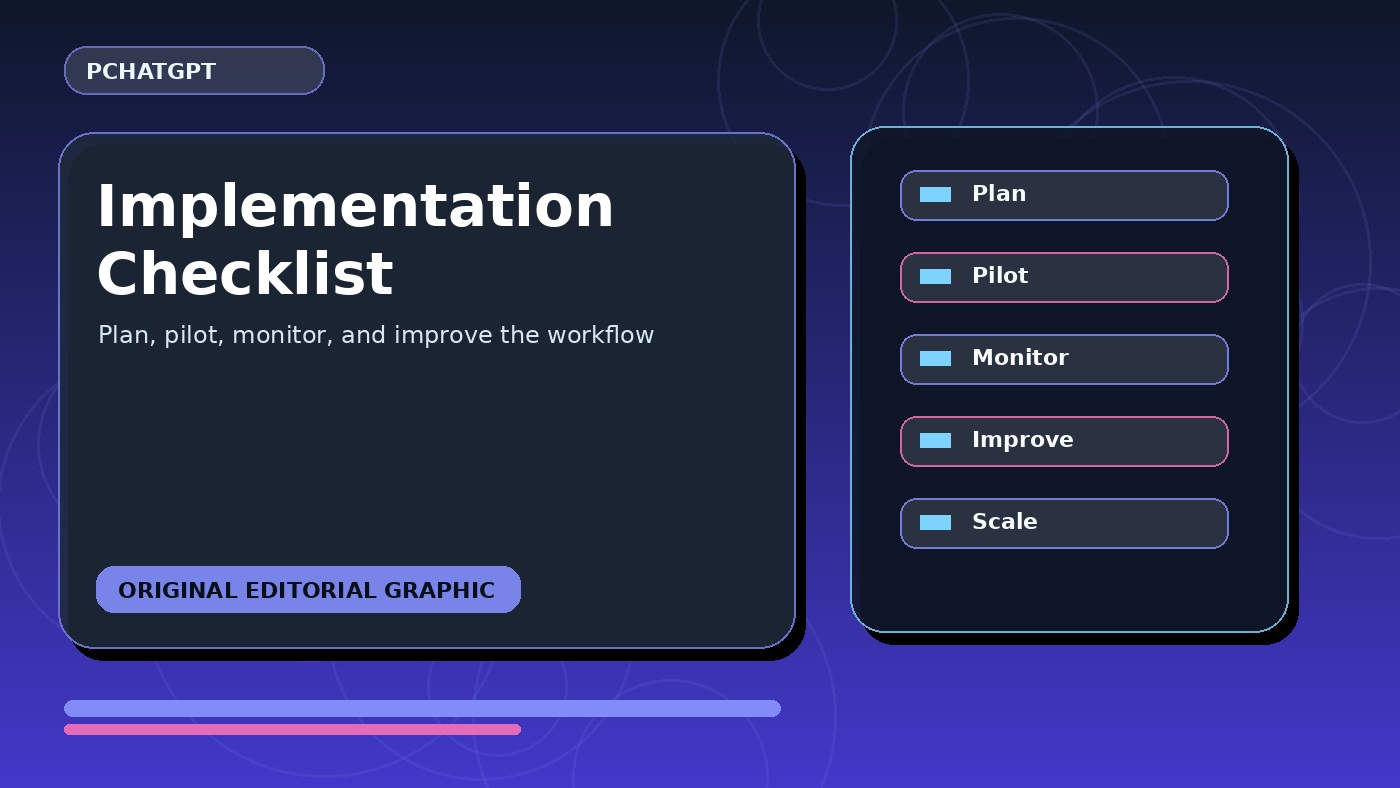
Begin with Luna on well-defined, repetitive work. Move to Terra when the task needs more judgment, has varied inputs, or creates too many Luna retries. Use Sol when ambiguity, long-horizon planning, difficult tool use, or the cost of failure makes additional capability worth paying for.
Test with a small set of representative cases. Keep the prompt, source material, tools, and scoring rules constant. Record factual errors, instruction failures, review time, latency, token use, and whether the output was accepted. One model can be cheaper per token but more expensive per approved result.
Routing can also happen within one workflow. OpenAI gives an example in which Sol resolves uncertainty and defines a coding plan, then Luna handles specified changes, tests, and evaluation. That pattern is useful beyond coding: use the stronger tier for the uncertain decision, then use a cheaper tier for bounded execution. Terra can replace either model when its measured results justify the middle price.
Why company benchmarks need context
OpenAI reports strong GPT-5.6 results across coding, browsing, computer use, professional work, science, and cybersecurity. These figures help describe the intended capability curve, but they are not a promise about your production workload. Some evaluations are internal. Test harnesses, graders, reasoning settings, tools, and time budgets vary. OpenAI also notes that its latency and API cost figures are simulated from production behavior and that real results may vary substantially.
Multi-agent results add another complication because total token use includes all agents while latency is derived from the root agent. A higher score may therefore involve a different cost and execution pattern. Benchmark comparisons can guide which model to test first. They should not replace a task-level evaluation using your own documents, constraints, and acceptance criteria.
Safety context and practical limits
The GPT-5.6 system card classifies Sol, Terra, and Luna as High capability for cybersecurity and biological or chemical risk, while stating that none reaches the High threshold for AI self-improvement. OpenAI says the models do not reach the Critical threshold in cyber or biological capability.
The system card describes layered safeguards, including model training, real-time checks, monitoring, and trust-based access for some sensitive defensive work. It also reports that GPT-5.6 showed a greater tendency than GPT-5.5 to go beyond user intent in agentic coding simulations, although absolute rates remained low. That is a practical reason to define permissions, confirmation points, and rollback boundaries for any model that can operate tools or edit data.
OpenAI says Sol’s cyber safeguards block roughly ten times more potentially harmful activity than previous models, which may also create friction for benign requests. Users can retry some prompts on a lower-capability model, while qualified defenders can seek Trusted Access. No safeguard makes outputs automatically correct. Human review remains necessary for consequential decisions, code deployment, health information, security work, and any action that can alter or disclose data.
Official sources
- OpenAI: GPT-5.6 launch, capabilities, availability, original pricing, and benchmark notes
- OpenAI: July 30, 2026 price, credit, and Fast mode changes
- OpenAI Deployment Safety Hub: GPT-5.6 system card
FAQ
Which GPT-5.6 model should most people start with?
For a mixed everyday workload, Terra is the clearest middle starting point because OpenAI positions it as the balanced tier. Start with Luna when the task is high volume and tightly specified. Start with Sol when the work is unusually difficult or costly to get wrong.
Is Luna available to free ChatGPT users?
The July 30 announcement says Free and Go users can access Terra in ChatGPT Work and Codex. It says Plus, Pro, Business, and Enterprise users can choose Terra and Luna. That source does not document Luna selection for Free or Go users.
Did ChatGPT subscription prices change on July 30, 2026?
No. OpenAI says ChatGPT and Codex subscription prices and quota budgets remained unchanged. Terra and Luna began consuming fewer credits, while the published API token prices for those models fell.
Does Sol always produce the best result?
No benchmark can establish that for every task. Sol is the highest-capability tier, but a clear routine prompt may not benefit enough to justify its higher cost. Compare models on representative tasks and score accepted outcomes, review effort, latency, and total cost.